
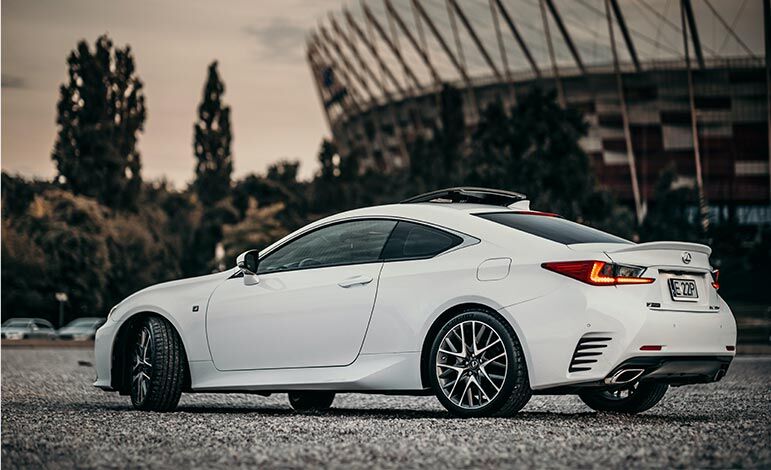
How Rim Size Affects Car Stability and Handling
When you change the diameter of your rims, you’re fundamentally altering one of your car’s most critical dynamic systems. The key to understanding this is the relationship between the rim and the tire.
Larger rims = shorter sidewalls. When you increase the wheel diameter, you typically fit lower-profile tires to keep the overall rolling radius the same. This has a direct impact on stability:
The Pros of Larger Rims:
- Sharper Handling & Cornering Grip: A larger wheel with a stiffer, shorter sidewall flexes less under the weight of the car during cornering. This results in a more direct, responsive feel through the steering wheel and more stability on curves.
- Increased Traction: Larger rims allow you to fit wider tires, which puts more rubber in contact with the road. This larger contact patch improves your vehicle’s overall grip, stability, and braking performance.
- Improved High-Speed Performance: The reduced sidewall flex and increased stability make larger wheel setups feel more planted and secure at higher speeds.
The Cons of Larger Rims:
- Firmer, Less Comfortable Ride: The shorter tire sidewall acts less effectively as a shock absorber. This means you’ll feel more of every bump and pothole, resulting in a harsher, firmer ride.
- Increased Risk of Damage: With less rubber to cushion impacts, your rims are far more vulnerable to being bent or cracked by potholes and other road hazards.
- Potential for Slower Acceleration & Higher Fuel Consumption: Larger wheels are often heavier, increasing “unsprung weight”. This added mass acts like a flywheel, making the engine work harder to accelerate and potentially decreasing fuel efficiency.
- Increased Stress on Suspension: The stiffer ride and additional weight can put more strain on your suspension components, leading to premature wear.
The Impact of Wider Rims & Offset
Stability is also affected by rim width and offset. Wider rims generally provide a larger contact patch for better grip. However, changing the offset—how far the wheel sits from the hub—alters the “scrub radius” and the leverage on your suspension. An aggressive offset can put extra stress on wheel bearings, leading to premature failure.
The Golden Rule of Upgrading: Plus Sizing
When upgrading to aftermarket rims, the industry-standard approach is called “Plus Sizing”. This means you increase the rim diameter while simultaneously decreasing the tire sidewall height to keep the overall diameter of the wheel and tire package as close to the original as possible.
The Critical 3% Rule: As a general rule, you should keep the overall tire diameter within ±3% of the original equipment (OEM) specification. Straying too far will cause your speedometer and odometer to be inaccurate, and can interfere with your car’s ABS and stability control systems.
A Plus One upgrade (e.g., 16″ to 17″) is the most common and usually doesn’t cause fitment problems. Plus Two (e.g., 16″ to 18″) is more aggressive and may require additional modifications or cause rubbing issues.
Recommended Rim Sizes for Different Vehicle Types
When choosing aftermarket rims, the right size depends heavily on your vehicle’s category. Here is a general guide to help you get started:
1. Compact & Entry-Level Cars (e.g., Toyota Vitz, Honda Fit)
- Typical OEM Size: 14″ – 16″
- Recommended Upgrade (Plus One): 15″ – 16″
- Recommended Upgrade (Plus Two): 16″ – 17″ (with caution)
- Typical Width: 5.5″ – 7.0″
- Notes: These cars are designed for efficiency and comfort. Going too large will significantly harm ride quality and acceleration. Stick to a modest upgrade.
2. Family Sedans & Mid-Size Cars (e.g., Toyota Camry, Honda Accord)
- Typical OEM Size: 16″ – 18″
- Recommended Upgrade (Plus One): 17″ – 18″
- Recommended Upgrade (Plus Two): 18″ – 19″
- Typical Width: 7.0″ – 8.5″
- Notes: A Plus One upgrade provides a great balance of improved handling without sacrificing too much ride comfort. An 18″ or 19″ wheel is a popular choice for a sportier look.
3. Performance Coupes & Sports Cars (e.g., Subaru WRX, BMW 3-Series)
- Typical OEM Size: 17″ – 19″
- Recommended Upgrade (Plus One): 18″ – 19″
- Recommended Upgrade (Plus Two): 19″ – 20″
- Typical Width: 8.0″ – 9.5″
- Notes: Handling is a priority. Larger, wider rims with low-profile tires are common to maximize grip and steering response. Always ensure the new setup clears the larger brake calipers often found on these cars.
4. SUVs & Crossovers (e.g., Toyota RAV4, Subaru Forester)
- Typical OEM Size: 17″ – 19″
- Recommended Upgrade (Plus One): 18″ – 20″
- Recommended Upgrade (Plus Two): 20″ – 21″ (with caution)
- Typical Width: 7.5″ – 9.0″
- Notes: A modest upgrade can enhance the vehicle’s stance and on-road handling. However, for rural Kenyan roads, be cautious with very low-profile tires as they are more susceptible to damage from potholes and sharp stones. A 17″ or 18″ rim with a slightly taller sidewall may be a more durable and comfortable choice for mixed on/off-road use.
5. Large SUVs & Trucks (e.g., Toyota Land Cruiser, Ford Ranger)
- Typical OEM Size: 18″ – 20″
- Recommended Upgrade (Plus One): 20″ – 22″
- Recommended Upgrade (Plus Two): 22″ – 24″
- Typical Width: 8.5″ – 10.0″
- Notes: These vehicles can accommodate much larger rims. 20″ to 22″ wheels are common for a bold, aggressive look. However, for serious off-roading, many owners actually downsize their rims (Minus Sizing) to allow for taller, more flexible sidewalls that provide better traction and impact absorption on rough terrain.
The Key Fitment Factors (Beyond Diameter)
When buying aftermarket rims, the diameter is just one piece of the puzzle. To ensure a safe and proper fit, you must also consider:
- Bolt Pattern (PCD): The number of lug nuts and the diameter of the circle they form (e.g., 5×114.3). This must match your vehicle exactly.
- Offset (ET): The distance from the wheel’s mounting surface to its centerline. The wrong offset can cause your wheels to rub against the fenders or suspension components.
- Centre Bore: The diameter of the hole in the center of the wheel. It must match your vehicle’s hub to ensure the wheel is perfectly centered.
- Width: The width of the rim, measured in inches (e.g., 8.5J). Wider rims allow for wider tires, but you must ensure they will fit within your wheel arches.
Final Thoughts
Upgrading your alloy rims is an exciting way to enhance your vehicle’s appearance and performance. However, it’s a decision that requires careful thought. Bigger isn’t always better. By understanding how rim size affects stability, adhering to the principles of Plus Sizing, and considering your vehicle type and driving conditions, you can choose a setup that looks great and performs safely for years to come.
Always consult with a professional wheel and tire specialist. They can help you navigate the technical specifications and find the perfect fit for your car and your budget.
0 thoughts on “How Rim Size Affects Car Stability and Handling”
But I must explain to you how all this mistaken idea of denouncing pleasure and praising pawas born and I will give you a complete account
Again is there anyone who loves or pursues or desires to obtain paiits ecause it is pain, but because occasionally circumstances occur in which
Harum quidem rerum facilis est et expedita distinctio. Nam libero tempore, cum soluta nobis est eligendi optio cumque nihil impedit quo minus id quod maxime